When in doubt – measure!
A large transit bus manufacturer was directed to make a change to improve the health and safety of the workers welding the metal vehicle frames. The materials they are using emit gasses that are hazardous to workers and can cause long term negative health effects. To counteract this the Health and Safety department settled on a type of welding hood that uses a vortex style ventilator that not only supplies fresh breathing air but also cools the workers during unseasonably hot conditions in summer.
The Engineering department was advised that each of the 110 ventilators would consume 15 cfm on top of the additional air required for desiccant style breathing air purifiers that would consume 15% of their nameplate rating as purge air. To feed the expected peak load the compressed air supply needed to be doubled from the existing 500 HP total capacity to a larger 1,000 HP size. This size increase would cost considerable funds to purchase and would significantly increase the compressed air operating costs due to the lack of adequate storage receiver capacity and lack of space to install any new volume.
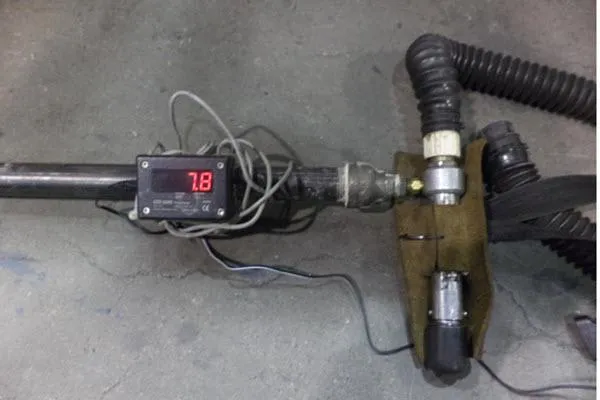
The manufacturer approached their local power utility for a financial incentive for the system upgrade. Before agreeing to assist the utility did some assumption checks and actually measured a number of ventilators that were already on site to determine the individual flow. After doing some simple measurements it was determined that the units consumed a maximum of 7.5 cfm of flow, not the higher 15 cfm estimate. Furthermore, due to the diversity of the load the average flow for a bank of multiple ventilators was quite a bit lower than this maximum level.
Using this new information the company was able to scale back their capacity increase by 300 HP, saving significantly on new compressors and associated auxiliary equipment. Because the project was much lower than budgeted the company could afford to install more efficient two stage compressors with VSD control, cycling air dryers, breathing air purifiers with dew point control, compressor sequencing, and low differential filters which greatly reduce the cost per unit of air produced. These improvements are expected to make their system more efficient that is was before the change. Expected savings from the base case 1,000 HP capacity is $74,000 per year for a 43% improvement. With the utility incentive the expected simple payback is 1.5 years.
Learn more about compressed air measurement in our next Compressed Air Challenge webinar. Visit www.compressedairchallenge.org for more information.