Hidden Piping Problems
A food processing plant recently built an expansion to their existing building. The compressed air system in the new plant was of very efficient cutting edge, self-contained design. The system uses a mix of VSD and fixed speed compressors with a central controller, desiccant air dryers with dewpoint control, large storage, and pressure/flow controller. The plant was supplied by a well-sized stainless steel loop system. But, once the plant was commissioned some critical machines started to have pressure problems. This caused compressor discharge pressures to be increased to 125 psi to correct.
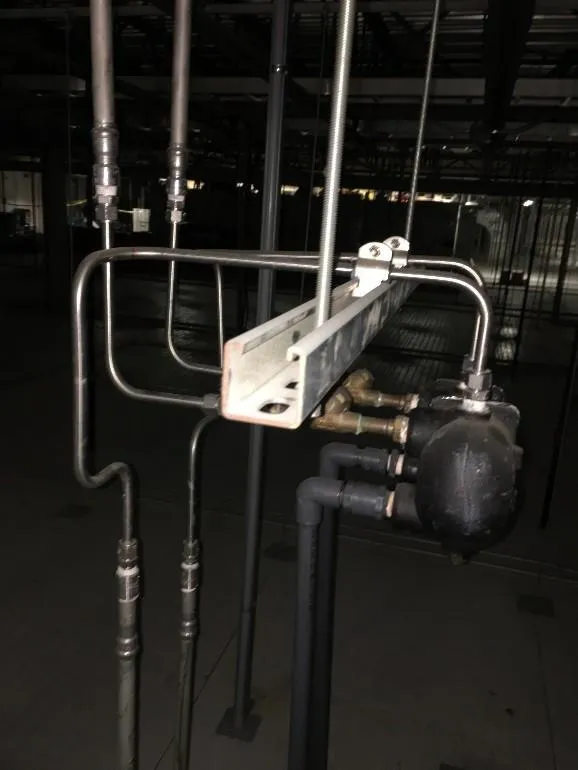
During a compressed air assessment a compressed air auditor viewed the piping arrangement looking for problems. The piping had been hidden in an area above the ceiling of the production area for easier sanitation. Each production machine was fed through piping that was connected above the production area and run through the ceiling. The ceiling concealed some disturbing facts about piping connections.
The piping chosen by the facility was stainless steel style with crimped connections between fittings and piping sections. Spaced about every 30 feet was a well sized piping tap from which the production area piping could be supplied. The typical tap was about one inch in size. The main loop looked very neat and well installed, however, due to its crimped design it was difficult to tap additional feed connections to production machinery, when required.
In looking at the piping distribution the auditor found some strange connections. For example, two one inch piping runs to critical robots were run through some condensate traps normally used for steam duty to remove any free water that might contaminate the robot pneumatic circuitry in the event of dryer failure. It appeared that whoever did the piping had reduced the pipe size down to 3/8 inch tubing to do the connections, then increased the size back up to one inch before it passed through the ceiling. Perhaps that day the proper connections were not available. This caused hidden piping restrictions that starved the robots of pressure.
Some other connections were made using one inch pipe, then reduced down to a smaller ½ inch size for a long run, then increased back to one inch before running to the machines. Due to the lack of main piping taps, numerous machines were fed from this one piping run, rather than providing dedicated lines to each machine. It appears the piping contractors had saved themselves some material costs knowing that cutting corners would not be easily detected.
As more machines were added the required taps were not easy to install during production hours, so the next closest available empty tap was used instead. This sometimes caused piping runs of a hundred feet or more, but without an increase in piping size to compensate for length.
Currently the piping is being reconfigured to provide more adequate capacity to each machine. It is hoped the pressure problems can be solved and plant pressures can be reduced to a lower level to save energy.
Learn more at our training: www.compressedairchallenge.org/calendar